AI Environmental Baseline

"It's just software" is a story we tell ourselves, not a fact. Every Copilot query has a carbon and water cost.

Program lead · MillerKnoll · 2025

~998K queries / year
~1,004 kg CO₂e
~24,957 liters of water

Context

If a company is serious about sustainability commitments, AI usage does not get a pass just because it is invisible. We needed an emissions tracking model for Microsoft 365 Copilot and Copilot Chat across roughly 4,000 employees, built to GHG Protocol Scope 3 Category 1 methodology.

What I built

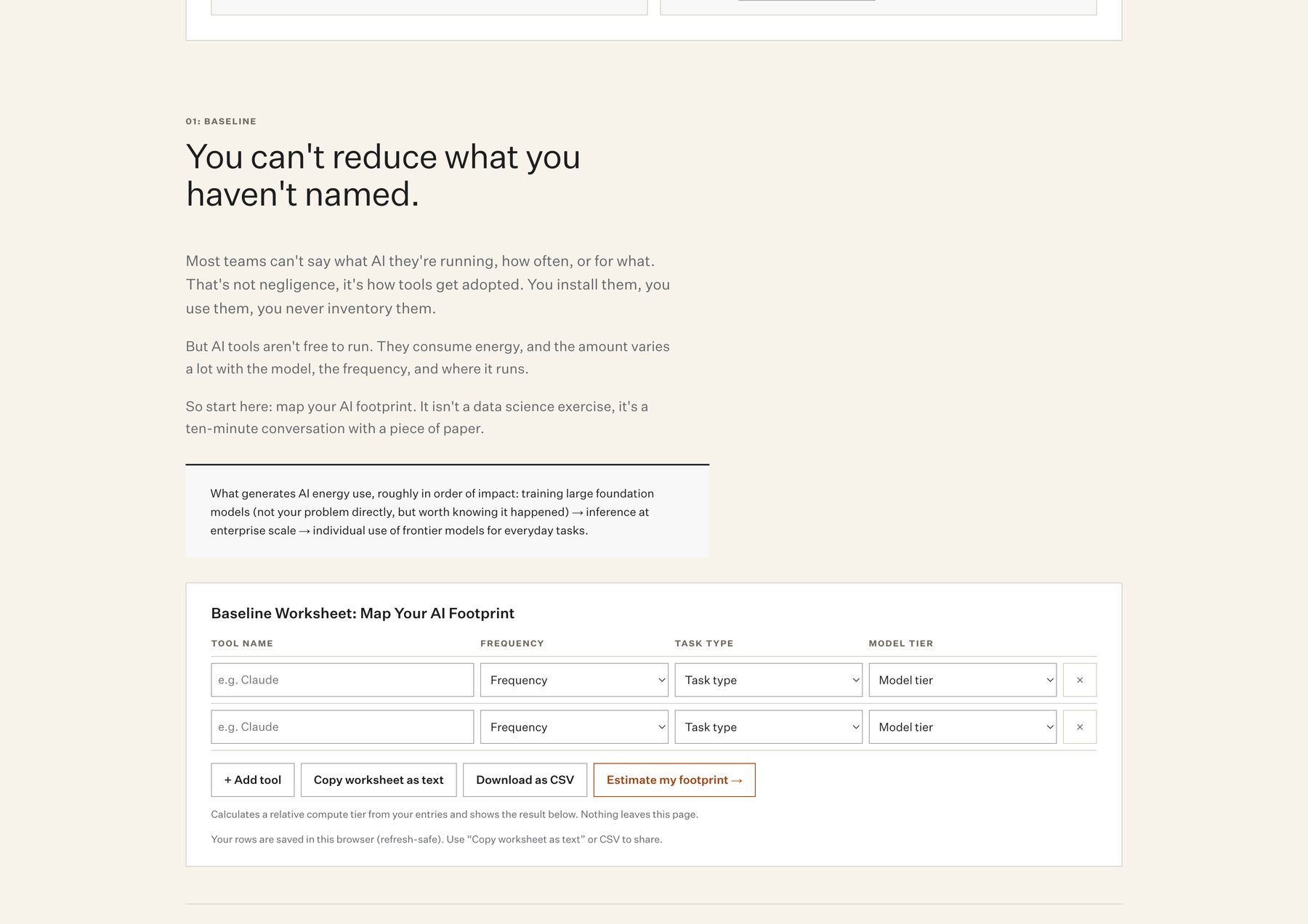
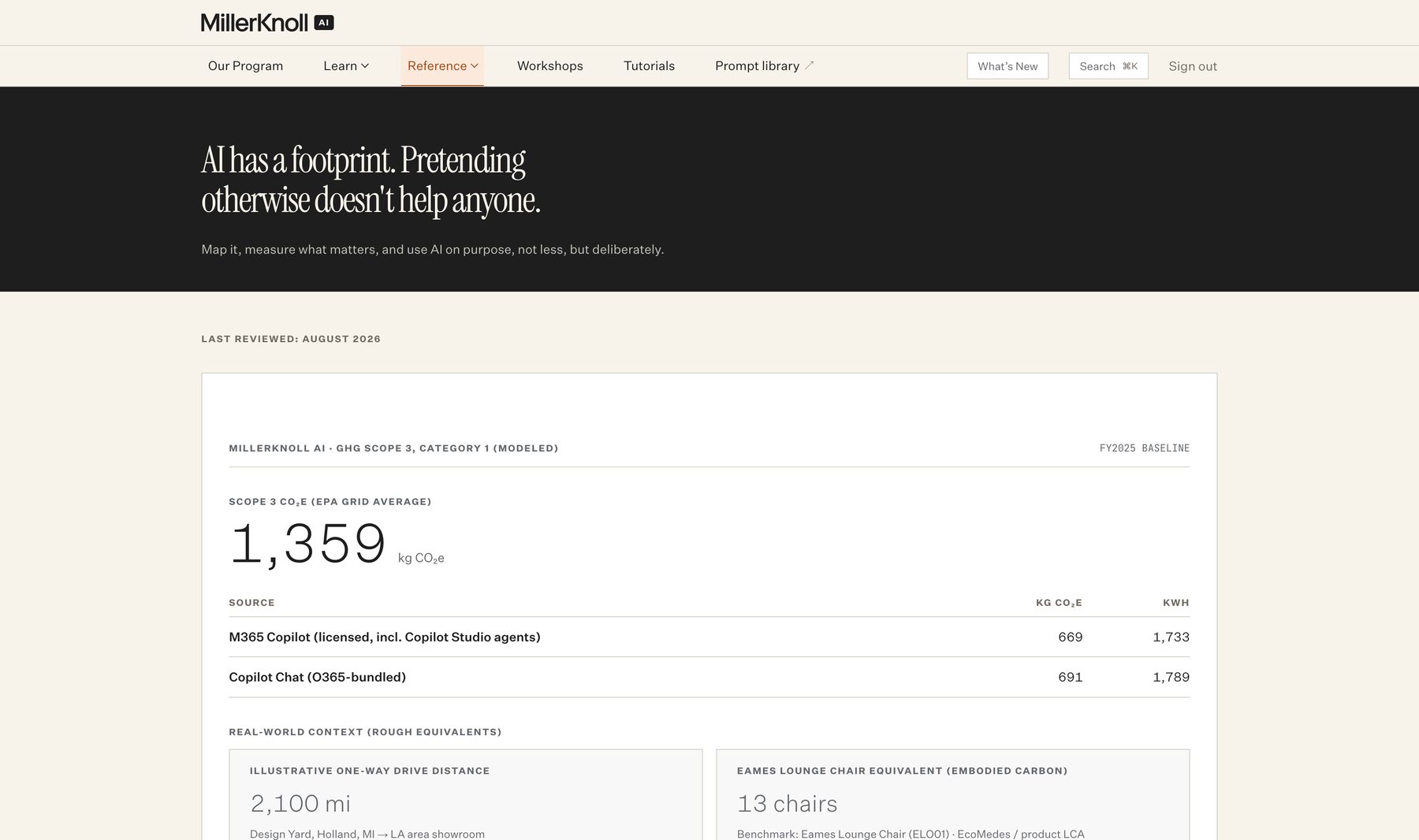
A measured baseline and a teaching story. The annual picture: about 998,000 queries, about 2,602 kWh, about 1,004 kg CO₂e, and about 24,957 liters of water.

Deliverables included an Excel tracker, PDF one-pager, PowerPoint deck, HTML microsite, and Word curriculum guide. Collaborators: Gabe on sustainability, Noah Schwarz on AI and carbon design.

How it worked

The sharpest finding is governance, not just math. About 60% of the measured footprint comes from Copilot Chat, which is unprocured and cannot be disabled at the tenant level. A meaningful share of the company’s AI environmental footprint is happening through a channel nobody formally approved and nobody can currently turn off.

Copilot Studio agent sessions are flagged as a separate data gap, carrying an estimated 30x energy multiplier versus a standard chat query. Not yet fully measured, but too large to ignore.

The teaching case is bio-based polyurethane: roughly 22.8 kg CO₂e per kg, versus roughly 5.7 for fossil-based PU. Intentionally counterintuitive. The “green” material choice is not automatically the lower-carbon one, and that is the assumption-check this work trains people to make before trusting a label.

Outcome

An unusual pairing: AI enablement work with rigorous environmental measurement of that same AI usage. Scope stayed honest. A material comparator using public emission factors is buildable. A product-level EPD decomposition tool is not, and this project deliberately does not try to be one. Knowing what not to build is part of the credibility.

What I’d do next

Close the Copilot Studio measurement gap. Pair the baseline with curriculum so integrators see how their workflows move the number.